

THE INTERVIEW: How to Stop Intergenerational Trauma in Immigrant Families
A conversation with mental-health revolutionaries Alicia Lieberman and Vilma Reyes & a way for you to support their work

BELOW YOU WILL FIND AN INTERVIEW WITH TWO AMAZING WOMEN WHO HAVE DEDICATED THEIR LIVES TO HELPING FAMILIES NAVIGATE TRAUMA, AND BELIEVE PARENTS’ WELL-BEING MATTERS AS MUCH AS CHILDREN’S WELL-BEING.
THEY ARE WORKING HARD TO HELP TRAUMATIZED UNDOCUMENTED FAMILIES GET THE MENTAL HEALTH SUPPORT THEY NEED RIGHT NOW TO TRY TO PREVENT INTERGENERATIONAL TRAUMA. IF YOU DON’T HAVE TIME TO READ ON, BUT TRUST ME ON THIS ONE, AND WANT TO FINANCIALLY SUPPORT THEIR WORK, SCROLL DOWN TO THE QUICK DONATION LINKS BELOW.
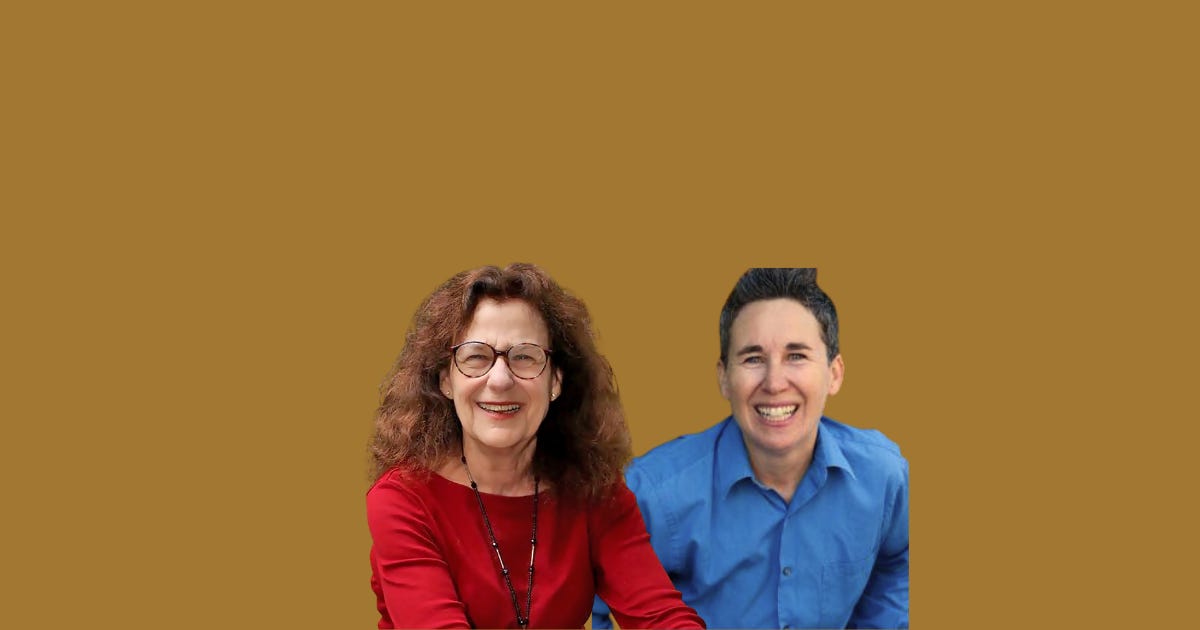
Last month, I organized an in-person fundraiser for the Child Trauma Research Program at UCSF to help get better mental health support for immigrant families.
This program is on the frontlines of such work, offering a type of therapeutic intervention called Child-Parent Psychotherapy (CPP) which is aimed at families with young children who experience trauma. Right now, they are doing incredible, essential work making sure immigrant families are receiving the mental health support they need to minimize intergenerational harm.
Developed by Alicia Lieberman and Patricia Van Horn in the late 1990s in San Francisco, CPP is rooted in attachment theory, but unlike a lot of attachment practitioners that come before them (hat tip, Nancy Reddy), they see both the child and the parent as in need of help, care, empathy and understanding.
In their own words:
CPP is a relationship-focused treatment because traumatized young children often live in families that experienced severe adversity and hardship across multiple generations. The CPP model holds that protecting children begins with helping parents repair the impact of trauma on themselves. When parents grow in their self-compassion, they can move from fear and anger to a more protective loving stance towards their children.
How beautiful is that!
CPP is now backed up by 5 randomized controlled trials (RTCs) and several community-based clinical studies, and is disseminated by 2000+ clinicians in 40+ states and several countries.
For the fundraiser, I interviewed Alicia Lieberman, director, and Vilma Reyes, training director, of the Child Trauma Research Program. It was a moving and nourishing afternoon of conversation, the most excellent tamales in the Bay, and art on immigration from Emily Cohen Ibañez and Hila Amram. We raised nearly $10,000, which covers the cost of training and supporting the work of a social worker who won’t just deliver CPP-informed care to patients, but also bring the model to social service providers around the Bay Area.(Few undocumented families are up for seeking therapeutic help right now from someone new, no matter how much they need it. So social workers have to find ways to offer this care through other trusted providers, or institutions these families have a pre-existing relationship with.)
Below, I transcribed some of the highlights from my conversation with Alicia and Vilma. You can watch/listen the whole recording here. (Passcode: bkt0!&Cj)
But before you begin reading, I am going to pass the hat and ask that you contribute to this wonderful organization giving our immigrant family neighbors the support they deserve. If 1000 of you donate $10 we would collectively raise $10,000. Together, we could support the training and supporting the work of another social worker in the Bay Area. Also, CPP is training practitioners in other cities, so your donation will help them expand their scope and keep up with the demand during this horrific moment.
You can donate directly here. Or, a time-saving option for busy caregivers, you can Venmo me and I will make a big donation on behalf of all of us.

FROM OUR CONVERSATION LAST MONTH
ELISSA: Like everyone else, I’ve been reading the news and feeling devastated by how much harm is happening and wanted to do something about it. I met Alicia through my work for the Van Leer Foundation, and learned all about her excellent work with immigrant families, so I reached out and here we are. Thank you everyone for coming.
Alicia and Vilma, I want to start by hearing how you both got into this.
ALICIA: Serendipity.
I always wanted to be an adult therapist. When I immigrated to the U.S., I was living in Baltimore and couldn’t drive. I was told, “Go to Johns Hopkins because Mary Ainsworth is there.” She co-created attachment theory with John Bowlby, and people said if you studied with her, you could do anything.
I interviewed with her, she accepted me, and I became deeply interested in attachment. Still, when I finished my PhD, I thought I would work with adults.
Then my husband went to Ann Arbor for his residency, and someone told me Selma Fraiberg was there. Selma developed the concept of “ghosts in the nursery” — the intergenerational transmission of trauma.
I resisted at first. I still wanted to work with adults. But I realized babies have parents. Once I started the work, I fell in love with it. Selma taught me how the pain of parents becomes the pain of children. Those babies went straight to my heart, and that became my life’s work.
When Selma moved to UCSF, she needed a Spanish-speaking clinician to work with the growing Latino immigrant community. This was in the early 1980s, during the wars in Guatemala, El Salvador, and Honduras. So I came to San Francisco with her.
We began working with immigrant families and conducted the first randomized studies showing that treating parents and babies together reduced maternal depression, PTSD, and anxiety — and that those improvements translated into secure attachment for children. This was compared to families receiving individual treatment.
That’s how the two-generation approach began: focusing on relationships and how family climate creates either a trajectory toward health or toward pain.
We began working with immigrant families and conducted the first randomized studies showing that treating parents and babies together reduced maternal depression, PTSD, and anxiety — and that those improvements translated into secure attachment for children. This was compared to families receiving individual treatment.
VILMA: My story begins in Peru. My family lived through significant political violence and terrorism in the 1990s. When I was 12, we immigrated to the U.S., carrying our hopes, dreams, and resilience with us.
That experience shaped my commitment to working with immigrant communities. Like Alicia, I found my way to this work through exceptional mentors. Early in my career, I found this model, found Alicia, and never turned back.
ELISSA: Tell us more about Child-Parent Psychotherapy.
ALICIA: Child–Parent Psychotherapy involves meeting with the parent and child together, but we begin by meeting with the parent alone. We call this the foundational phase.
Children — from birth to age five — are often referred to us because of behavioral concerns: tantrums, aggression, or preschool expulsion. Too often, the implicit assumption is that the parent is doing something wrong.
What’s missing is attention to the parent’s history and pain.
So we create space for the parent to tell their story, and not just as a parent, but as a person. We meet individually for four to six sessions, then co-create a family narrative that helps answer: What happened? How might this be connected to your child’s struggles? What do you want for your family?
We develop a shared formulation, helping parents see that their reactions and their child’s behaviors are understandable responses to trauma. This often brings profound relief: I’m not broken. My child isn’t broken.
From there, we meet with parent and child together, using play and conversation to “speak the unspeakable.” We help children understand their experiences in a safe, relational context, supported by parents who want to help and heal.
We see significant reductions in PTSD, depression, and anxiety for both parents and children. Recent research even shows decreased cellular aging in children who receive CPP.
ELISSA: What makes it so effective?
VILMA: All wounding, and all healing, happens in relationships.
Many models focus on behavior alone. CPP focuses on story, meaning, and connection. We partner with parents to help children understand not just what they feel, but why, and to know they’re not alone with their memories.
Trauma impacts both generations. Parents often feel deep pain over not being able to protect their child, especially in immigrant families where separation is forced. CPP helps restore parents’ confidence and children’s trust.
That’s why the outcomes last. We’re not extinguishing behavior. We’re shifting understanding. Our goal is to work ourselves out of a job by strengthening the parent–child relationship so healing continues without us.
ELISSA: You’ve spoken about how our trauma and healing happens in the context of our families. But of course it also happens in the context of the political and economic circumstances in which we live.
ALICIA: Yes. There’s no such thing as “just” a child or “just” a parent. Families live within political, social, and economic contexts.
Right now, immigrant communities are terrified. Families are afraid to leave their homes. Trust in institutions has been shattered.
Our response has been to return to community-based care. This means that we partner with trusted organizations and bring services to families where they already feel safe. We’re rebuilding long-standing partnerships and training providers to work directly in community settings.
We’re also rediscovering home visiting, and overall adapting how and where we provide care to meet families’ realities.
ELISSA: I’m just thinking about how absolutely hard it is to parent during traumatic moments, to be there for your kids while you yourself are feeling unsafe. How can, or should, parents get through it?
ALICIA: There’s no perfect answer. Humility matters.
What we’ve learned is that children know far more than we assume. They sense what’s happening, even when adults try to hide it. What helps most is honest, developmentally appropriate truth, held within a relationship where the parent remains emotionally present and protective.
Healing happens when parents and children can make meaning together.
LAST WEEK I EMAILED VILMA TWO MORE QUESTIONS, IN LIGHT OF WHAT IS HAPPENING IN MINNESOTA.
ELISSA: Can you tell us the potential (and likely) long term impact this trauma is having on the parents and children living through this brutal anti-immigrant moment? How can we as a broader community help alleviate that trauma, today and further down the road?
VILMA: Sadly, we know that when children and families are exposed to targeted violence (including hate-based threats, raids, family separation, or chronic fear of being targeted), the effects are longstanding and pervasive. We know it affects brain development, emotional regulation, sleep, immune functioning, development, and learning, and it disrupts healthy attachment. We know it impacts parental mental health, worsens the family’s economic and housing instability, and social isolation, all factors that predict child outcomes.
Families are buffered by protective relationships and systems. We can alleviate the trauma by creating safe spaces that affirm immigrant families, investing in mental health supports for parents, supporting families in maintaining predictable routines (when safe to do so), honoring cultural strengths and wisdom, and partnering with local community organizations to learn how to help. We can all help. The antidote of targeted violence is safety, stability, and solidarity.
ELISSA: How can folks in other cities bring CPP to their hometowns? If a practitioner or community group wants to learn more, how might they go about that?
VILMA: Absolutely. We have trained CPP clinicians in almost every state. People can refer to the CPP website and seek providers in their city. There is also information there on how to request CPP training for their organization. If they are interested in more information about the CPP informed groups, they can reach out to me (vilma.reyes@ucsf.edu) or Brooke Kimbro (brooke.kimbro@ucsf.edu).
The two generation focus makes so much sense, especially in moments when families are living under constant threat. I keep thinking about how powerful it is to begin with the parent’s story first, before ever addressing the child’s behavior. The idea that relief can come from realizing no one in the room is broken feels transformative for families carrying so much fear. It also feels urgent right now, when immigrant parents are being asked to stay strong while navigating instability themselves. I’m grateful this kind of work exists and that there are ways for communities to step in and support it.
This was such a special conversation to witness. Thank you for introducing me to their work.